2 hr
Old Town Tallinn Historical Walking Tour
Explore medieval streets, castles, and panoramic viewpoints with a local expert guide
Reserve
Hand-picked by our editors — only the best 5 tours from 18 reviewed.
Verified partners for every tour, free cancellation where available, and instant confirmation on every booking.
2 hr
Explore medieval streets, castles, and panoramic viewpoints with a local expert guide
Reserve
1 hr
Explore medieval streets, hilltop panoramas, and centuries-old landmarks with a local guide
Reserve
2 hr
Explore cobblestone lanes, medieval towers, and panoramic viewpoints with a local guide
ReservePrices from verified partners. Availability updates in real time at checkout. Free cancellation policies apply where shown.
The landmarks, rooms, and views travelers on this tour remember — all visible on a single visit.
This structure is the oldest surviving town hall in the Baltic region, dating back to 1404.
This orthodox cathedral features distinctive black onion domes and iconic mosaic decorations.
Constructed in the 12th century, this landmark once served as a primary lookout tower.
The seat of Estonian government, this site blends centuries of varied architectural styles.
This historic tower is an essential element of the skyline, standing 48 meters tall.
A guided experience offers curated storytelling that brings the medieval streets to life, while independent exploration provides the freedom to linger at your own pace; most visitors find the guided narrative adds significant depth to their appreciation of these Baltic landmarks.
| Feature | Top pick Guided Tour | Independent Exploration |
|---|---|---|
Narrative Depth |
Deep historical context and lore | Self-directed learning |
Cost |
Varies by provider (summer) | 0 EUR |
Flexibility |
Fixed departure times | Fully flexible schedule |
Pacing |
Set by guide | Personalized tempo |
Interactivity |
Q&A with professional guide | Limited to signage information |
Social Experience |
Group setting | Solo or private party |
| See tickets → |
Verdict: Choose a tallinn old town walking tour if you prioritize expert insights, or select independent exploration when you prefer to wander these UNESCO heritage streets at a personal pace, noting that tallinn old town walking tour tours require planning whereas tallinn old town walking tour tour options allow spontaneous access and tallinn old town walking tour tickets are easily secured for group excursions.
Choose your ticket, select your date, and reserve in under two minutes. Secure checkout handled by our verified partner.
Instant confirmation by email, with a mobile voucher you can save offline. No printing, no queuing at a collection desk.
Arrive at the entrance, show your voucher on your phone, and walk in. Most tickets include priority or skip-the-line access.
Practical details for your visit straight from our verified partners — hours, access, rules, and how to get there.
Vanaturg 2, 10146 Tallinn, Estonia
Standard meeting point for many city guides
Tram lines 1 and 2 stop at the edge of the historic district.
Bolt and local taxis provide direct access to the main gates.
Comfortable walking shoes are essential for navigating the historic limestone and cobblestone streets.
Keep personal belongings secure and close to your body while exploring public squares.
Photography is permitted throughout all public areas of the district, though respect local residents' privacy.
Many medieval streets feature uneven surfaces and steep inclines that can be difficult for wheelchair users.
Mobile phone use is unrestricted, and free public Wi-Fi is available in many parts of the city center.
The area is pedestrian-friendly, though parents should exercise caution with small children near moving vehicles on perimeter roads.
Numerous cafes and taverns provide traditional Estonian refreshments throughout the medieval center.
Pets are allowed on leashes, but must be kept clear of crowded tour groups.
Guided tallinn old town walking tour options are the most efficient way to learn about the architectural history of the Hanseatic league.
Vanaturg 2, 10146 Tallinn, Estonia
Standard meeting point for many city guides
Get directionsBest time to go, insider tips, nearby landmarks, and the cancellation fine print — flip through to skim what matters to you.
How crowds, weather, and events shift across the year.
June through August offers mild temperatures perfect for an outdoor tallinn old town walking tour.
May provides fewer crowds and blooming parks surrounding the ancient walls.
September brings cooler air and dramatic light for photography enthusiasts.
December features a traditional market, though temperatures often drop below freezing.
Small details that turn a good visit into a great one.
Arrive between 06:30–09:00 to experience the streets before large groups disembark.
Leave high heels behind, as the uneven stones make them impractical for any Tallinn Old Town walking tour.
Visit the tourist office at Vanaturg 2 for maps and local guidance.
The best light for shooting the city walls occurs shortly after sunrise.
Non-bookable sights within a short walk — free to visit, easy to pair.
Once the tallest building in the world, it offers a challenging climb for views.
This artillery tower houses exhibits on the city's military history.
A peaceful area associated with the legend of the Danish flag.
Flexible, no hidden fees.
Tours booked through our platform follow the specific cancellation terms outlined in your booking confirmation. Please refer to your voucher for details regarding full or partial refunds.
Hand-picked options within walking distance — pick a district for vibe, or a specific hotel for convenience.
Historical building located near the main square.
Modern, functional accommodation located near the ferry terminals.
Features original medieval architecture and vaulted ceilings.
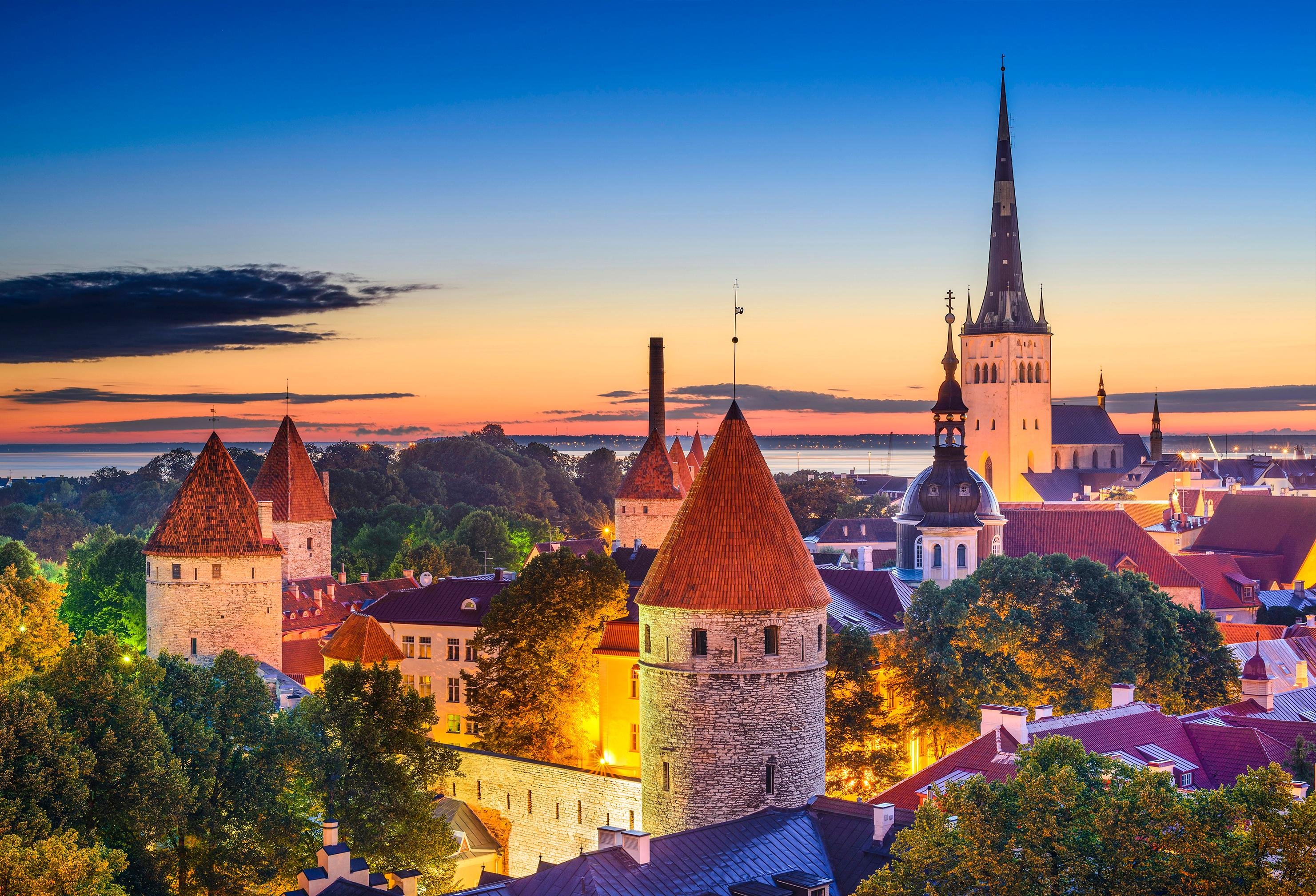
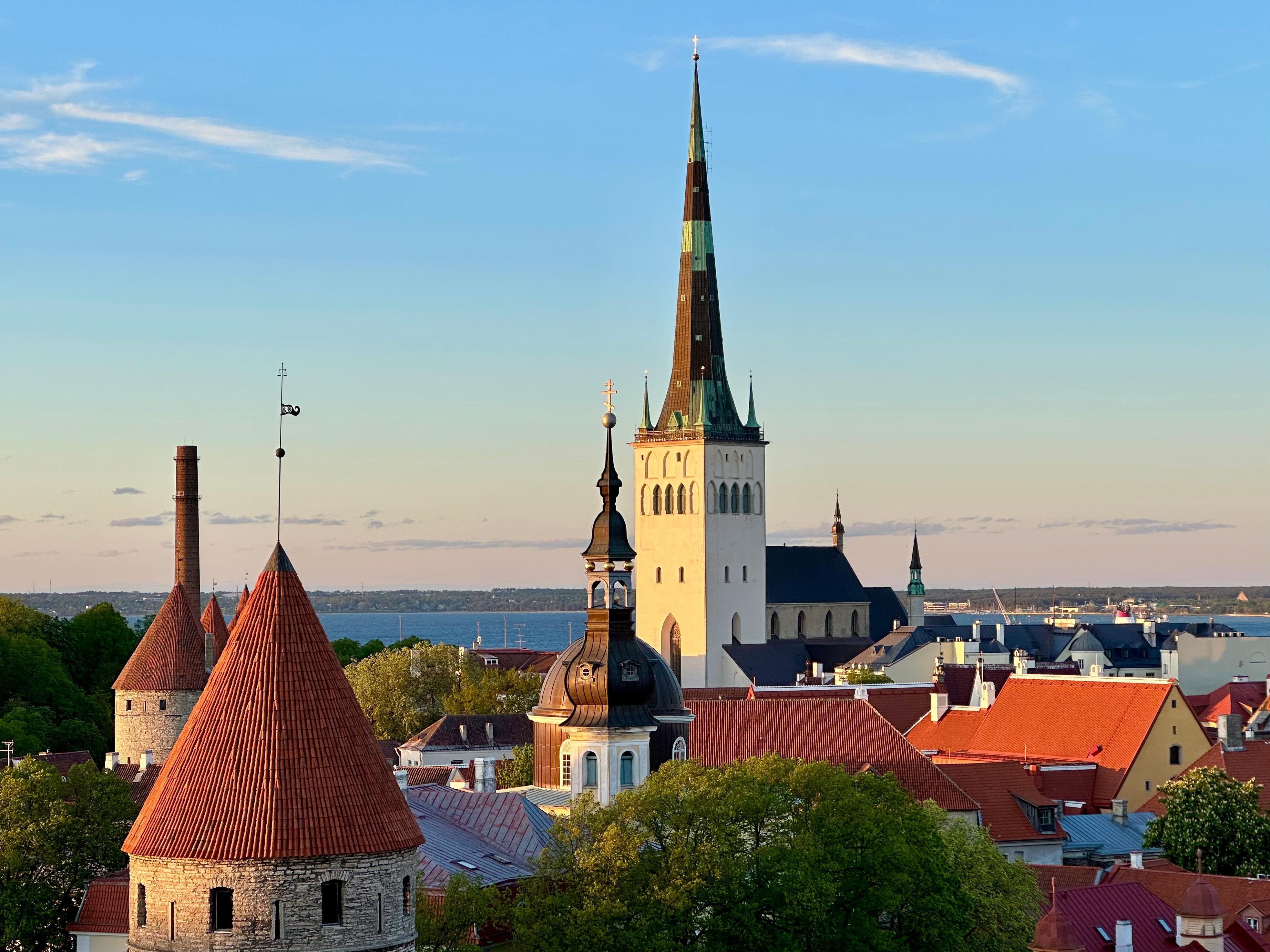
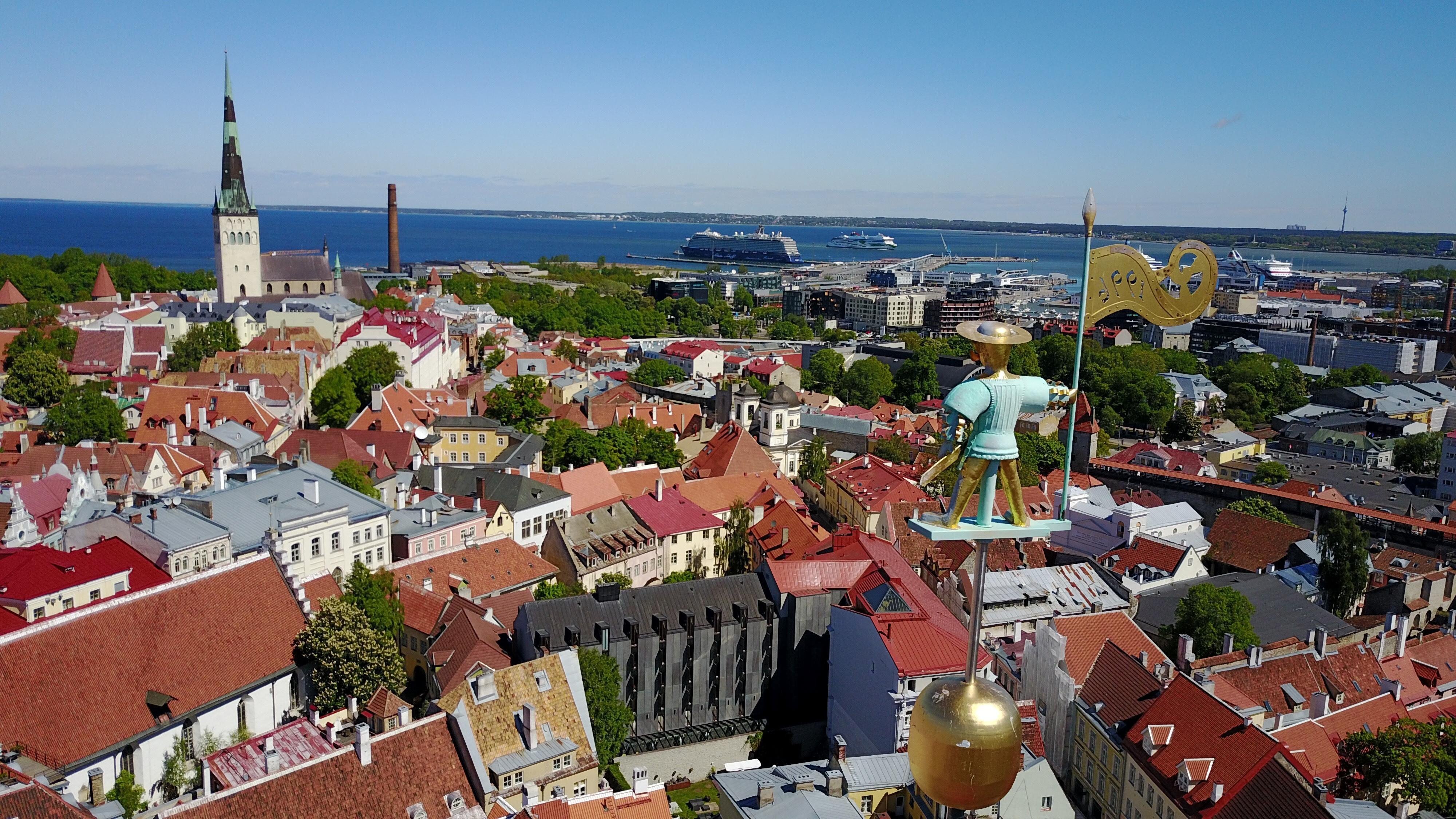
Tallinn's Old Town occupies 113 hectares enclosed by a medieval wall that once stretched 2.35 kilometers and rose behind 46 defensive towers. Only 26 towers remain standing, but the density of Gothic and Hanseatic architecture within the perimeter is unmatched in Northern Europe. The lower town, Vanalinn, was built by German merchant guilds between the 13th and 15th centuries. The upper town, Toompea, housed the Livonian nobility and the Danish-Estonian crown. UNESCO inscribed the entire quarter in 1997, citing its preservation of a Northern European trading city's urban fabric. The Town Hall Square, Raekoja plats, has served as the civic heart since 1322. The Gothic Town Hall itself was completed in 1404, making it the oldest surviving town hall in Northern Europe still serving its original administrative function. The spire's weathervane, Vana Toomas, has watched over the square since 1530. Surrounding the plaza are guildhouses painted in ochre, terracotta, and Prussian blue — each facade a catalog of merchant wealth. The Great Guild Hall, built in 1410, now houses the Estonian History Museum. The Brotherhood of Blackheads' House, reconstructed after wartime damage, displays the coat of arms of unmarried merchants who formed the fraternity in 1399. Toompea Hill rises 48 meters above the lower town, connected by the Long Leg and Short Leg stairways. Toompea Castle, seat of the Estonian Parliament, incorporates sections of the Danish fortress erected in 1219. The pink Baroque facade was added by Catherine the Great in 1773. Alexander Nevsky Cathedral, completed in 1900, represents Russian imperial assertion — its five onion domes visible across the city. St. Mary's Cathedral, Toomkirik, is the oldest church in mainland Estonia, founded in 1229 by Danish crusaders. Inside, 107 coats of arms line the walls, each marking a Baltic German noble family. The defensive wall network reveals medieval engineering. The 14th-century Kiek in de Kök tower, named for its vantage into domestic kitchens below, now displays cannonballs still embedded in its six-meter-thick walls from Ivan the Terrible's 1577 siege. The wall's covered passages connect to subterranean bastions dug by Swedish engineers in the 17th century. Walking the ramparts offers unobstructed views across terracotta rooftops to the Gulf of Finland.

"The Gothic Town Hall, completed in 1404, remains the oldest surviving town hall in Northern Europe still serving its original administrative function."
A step-by-step walkthrough of the visit — what you'll see, how long each stage takes, and the details that matter.
You enter through the Viru Gate, the twin-towered remnant of the eastern wall, and step onto cobblestones laid five centuries ago. The main artery, Viru Street, funnels you toward Raekoja plats. You reach the Town Hall Square within three minutes. The Gothic spire rises 64 meters above the plaza. You pause at the corner of the Great Guild Hall, where your guide points to iron brackets that once held merchant lanterns. You climb the Long Leg stairway, 181 steps rising to Toompea. The limestone treads are worn concave from seven centuries of traffic. At the summit, the Kohtuotsa viewing platform frames the lower town's roofline. You count eight church spires. Your guide identifies each by silhouette. You walk the perimeter to Patkuli, a second overlook that faces the port and the Baltic horizon. You descend through the covered Saiakang passage, a vaulted corridor connecting the upper and lower towns. The passage opens onto Pikk Street, where you stand before St. Olaf's Church. Its 124-meter spire made it the tallest structure in the world when completed in 1549. You finish at the Kiek in de Kök tower. The guide directs your attention to a cannonball lodged at eye level in the masonry — a relic from the Livonian War.
The Old Town streets are open 00:00–23:59 daily.
There is 0 EUR entrance fee to walk the streets and squares of the Old Town.
We recommend an arrival between 06:30–09:00 to avoid cruise ship crowds and improve your experience.
Much of the area is paved with uneven cobblestones, making it difficult for standard wheelchairs to navigate.
Pets are permitted in the public squares but should remain on a leash during any walking tour.
Yes, photography is permitted in all public areas throughout your tallinn old town walking tour.
Public toilets are available at various locations throughout the district, often requiring a small fee.
Sturdy, comfortable shoes are mandatory due to the historical stone terrain.
The district is accessible via local tram lines or a short taxi ride to the central Vanaturg 2 area.